
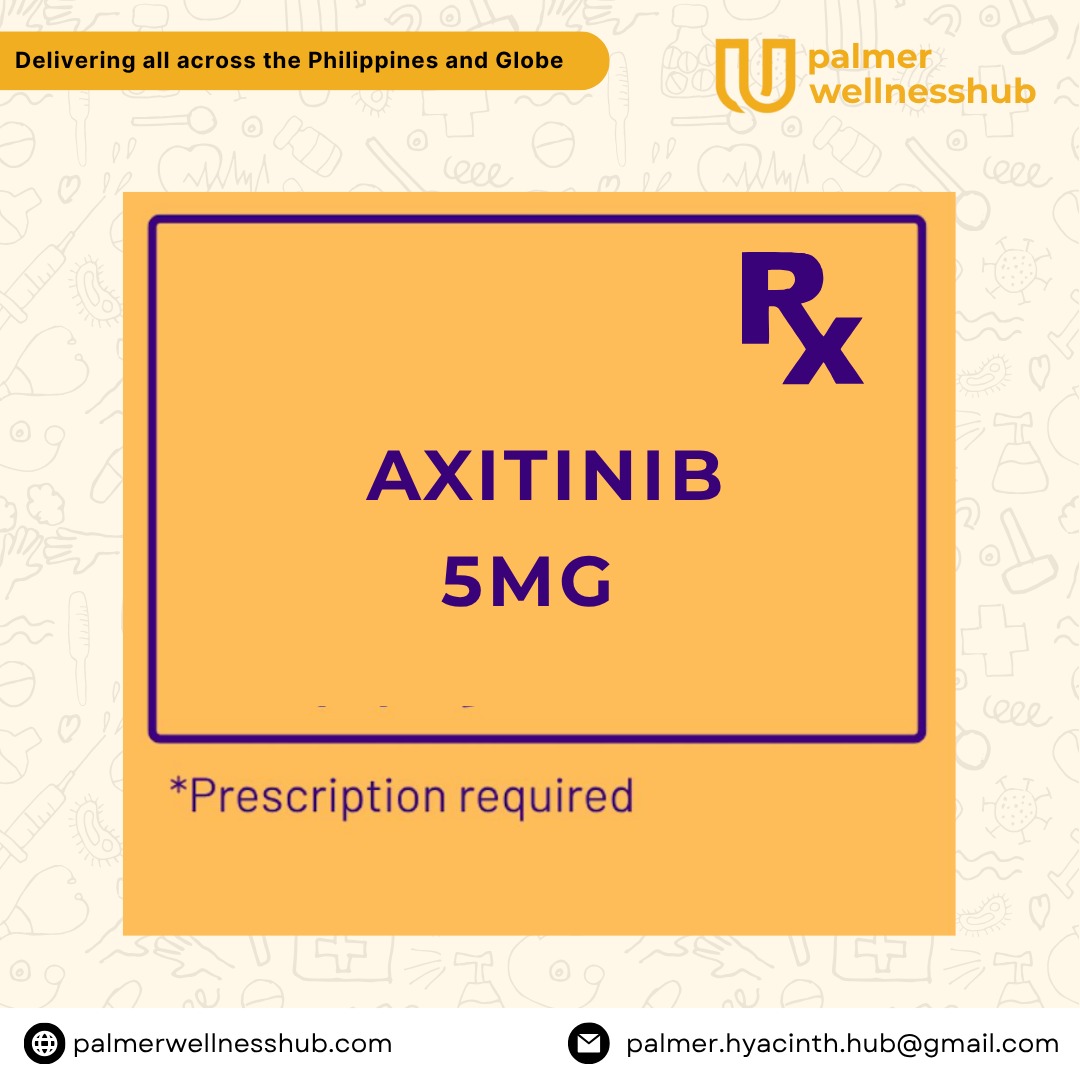
Premium quality Axitinib Tablets (1mg / 5mg) for the treatment of advanced kidney cancer (RCC). Trusted by oncologists worldwide. Available now at Palmer Wellness — Explore more cancer care solutions.
All over World Delivery

Safe & Secure Payment

Contact 24 Hours Day
✅ WHO-GMP certified suppliers
✅ Secure packaging & express worldwide shipping
✅ Expert pharmacist support
✅ Palmerwellness.com offers 100% genuine oncology medications
Take Axitinib tablets exactly as prescribed by your healthcare provider. Dosage may vary based on response and side effect tolerance.
Store below 30°C. Keep away from direct sunlight and moisture.
1. What is Axitinib and what is it primarily used for?
Axitinib is a type of targeted therapy drug known as a tyrosine kinase inhibitor (TKI). It is primarily used globally to treat advanced Renal Cell Carcinoma (RCC), a type of kidney cancer. It may be prescribed on its own or in combination with other cancer treatments.
2. How does Axitinib work against kidney cancer?
Axitinib is an “anti-angiogenesis” medication. It works by blocking specific signals (called VEGF receptors) that tumors use to create new blood vessels. By cutting off this blood supply, Axitinib helps to starve the tumor of the oxygen and nutrients it needs to grow and spread.
3. Is Axitinib a form of chemotherapy?
No, Axitinib is a targeted therapy. Unlike traditional chemotherapy that attacks all fast-growing cells, Axitinib is designed to interfere with specific molecular pathways that are more critical to the cancer’s growth, leading to a different profile of side effects.
4. What are the common brand names for Axitinib?
The original and most widely known global brand name is Inlyta®, developed by Pfizer. Depending on the country, including in the Philippines and other regions, generic versions may also be available. It’s best to consult with your oncologist about the specific brands available to you.
5. How is Axitinib usually taken?
Axitinib is an oral tablet, typically taken twice a day, with doses spaced approximately 12 hours apart.
6. Can I take Axitinib with food?
Yes, you can take Axitinib tablets with or without food. You should swallow the tablet whole with a glass of water.
7. What should I do if I miss a dose of Axitinib?
If you miss a dose, take your next dose at its regularly scheduled time. Do not take two doses at once to make up for a missed one. If you vomit after taking a dose, do not take another tablet; just wait for your next scheduled dose.
8. How is my dose determined and can it be changed during treatment?
The standard starting dose is 5 mg twice daily. Your oncologist may increase or decrease your dose based on how well you tolerate the side effects, particularly your blood pressure readings.
9. My doctor mentioned “combination therapy.” What does this mean?
In many countries, Axitinib is approved for use as a first-line treatment in combination with an immunotherapy drug (such as Pembrolizumab or Avelumab). This strategy attacks the cancer in two ways: by restricting its blood supply and by activating your own immune system to fight the cancer cells.
10. What are the most common side effects of Axitinib?
Common side effects include hypertension (high blood pressure), diarrhea, fatigue or weakness, decreased appetite, nausea, hoarseness, and Hand-Foot Skin Reaction (HFSR).
11. Why is high blood pressure a major side effect, and how is it managed?
High blood pressure is a very common side effect because Axitinib’s mechanism affects blood vessels throughout the body. It’s often seen as a sign the drug is working. Your oncologist will monitor your blood pressure frequently, especially at the start of treatment, and will prescribe medication to control it if needed.
12. What is Hand-Foot Skin Reaction (HFSR) and how can I manage it?
HFSR can cause redness, swelling, tenderness, or blistering on the palms and soles. To manage it, use thick, alcohol-free moisturizers, wear comfortable shoes, avoid very hot water, and protect your hands from friction. Notify your doctor if it becomes painful.
13. Can Axitinib cause thyroid problems?
Yes, Axitinib can cause the thyroid gland to become underactive (hypothyroidism). Your doctor will monitor your thyroid hormone levels with blood tests and can prescribe thyroid medication if your levels become too low.
14. What are the most serious potential side effects to watch out for?
While less common, serious side effects require immediate medical attention. These include blood clots (in legs, lungs, or brain), bleeding events, a hole in the stomach or intestines (gastrointestinal perforation), and severely high blood pressure.
15. How will my doctor monitor me during treatment?
You will have regular check-ups that include close monitoring of your blood pressure, along with blood tests to check your liver function, kidney function, thyroid levels, and blood cell counts.
16. Can Axitinib affect wound healing? Should I stop it before a planned surgery?
Yes, Axitinib can interfere with the body’s ability to heal wounds. You must tell your healthcare team you are on Axitinib before any surgery. Your doctor will likely advise you to stop taking it for at least 24 hours before a planned surgical procedure.
17. Can I take Axitinib if I am planning to have a child?
No. Axitinib can cause serious harm to a developing fetus. Women of reproductive potential must use highly effective contraception during treatment and for 1 week after the final dose. Men with female partners who could become pregnant should also use effective contraception.
18. Can Axitinib interact with other medications or specific foods?
Yes. You should avoid grapefruit and grapefruit juice, as they can dangerously increase the amount of Axitinib in your blood. Also, inform your doctor of all other medications you take, as some drugs can affect Axitinib levels.
19. Which type of doctor prescribes and manages Axitinib treatment?
Axitinib is a specialty cancer medication that must be prescribed and managed by a qualified Medical Oncologist.
20. Is Axitinib covered by health insurance or national programs in the Philippines?
Coverage for high-cost targeted therapies like Axitinib can be complex. In the Philippines, patients should consult directly with the Philippine Health Insurance Corporation (PhilHealth), their private Health Maintenance Organization (HMO), and the Philippine Charity Sweepstakes Office (PCSO) to understand available financial assistance and benefit packages. The hospital’s social work department can often provide guidance on navigating these options.
Disclaimer: This information is for educational purposes only and is not a substitute for professional medical advice. Axitinib is a potent prescription medication. Always consult your medical oncologist for diagnosis, treatment, and any questions you may have regarding your medical condition.
Reviews
There are no reviews yet.