
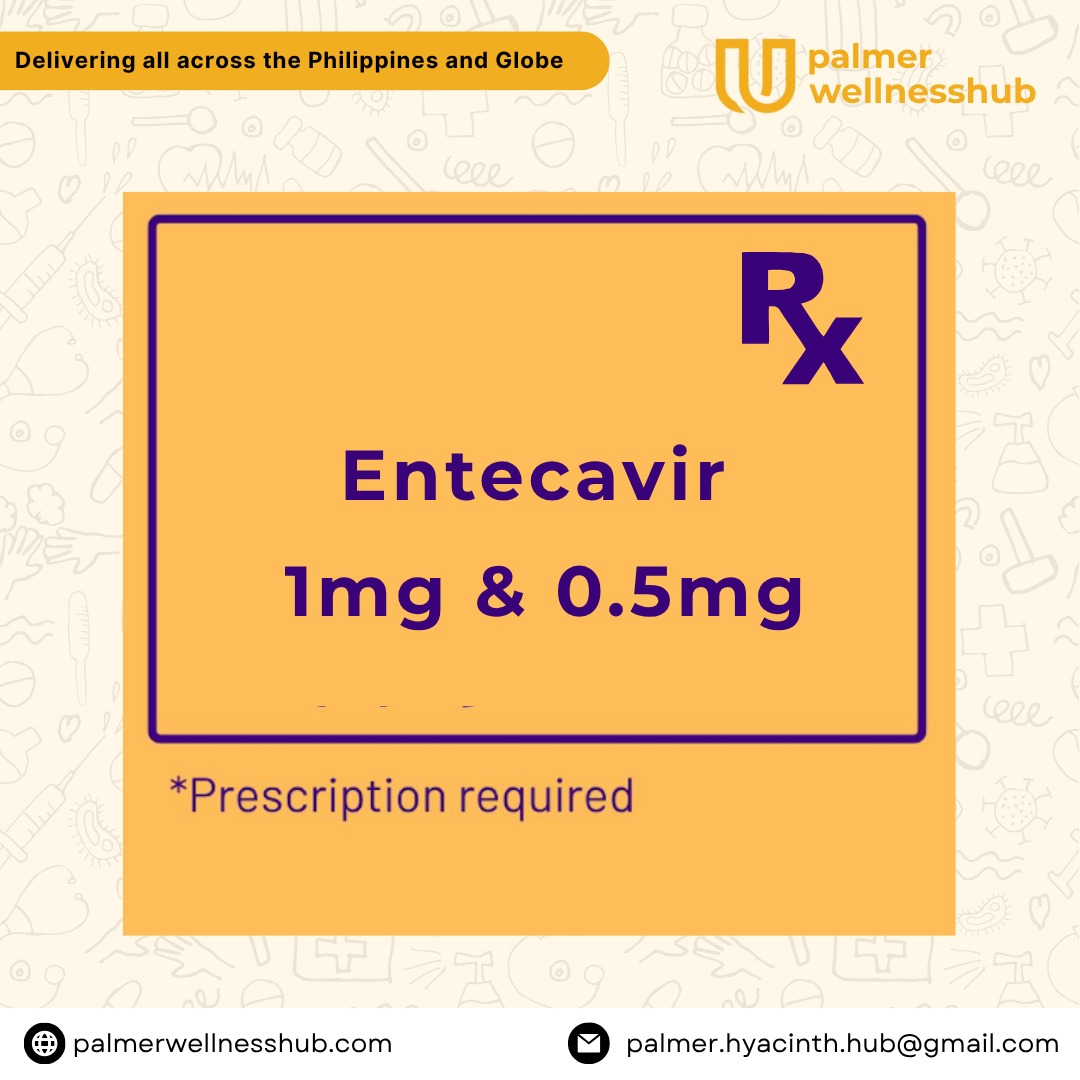
Entecavir is an antiviral medication used for chronic hepatitis B virus (HBV) infection. Available now at Palmer Wellness — trusted supplier of antiviral and hepatitis medicines.
All over World Delivery

Safe & Secure Payment

Contact 24 Hours Day
Entecavir is a highly effective oral antiviral medication prescribed for the treatment of chronic (long-term) Hepatitis B Virus (HBV) infection. It is recognized globally as a first-line therapy, helping to control the virus and reduce the risk of serious, long-term liver damage, including cirrhosis and liver cancer (hepatocellular carcinoma). Entecavir belongs to a class of drugs known as nucleoside analog reverse transcriptase inhibitors.
The Hepatitis B virus multiplies by creating copies of its own DNA inside the liver cells. To do this, it relies on a specific enzyme called HBV DNA polymerase.
Entecavir works by potently blocking this enzyme. It cleverly mimics one of the natural building blocks of DNA, gets incorporated into the viral DNA chain, and then acts as a “chain terminator.” By interfering with the HBV DNA polymerase enzyme at three key steps of the replication process, Entecavir effectively stops the virus from making copies of itself. This leads to a significant reduction in the amount of HBV in the body (the “viral load”), which in turn reduces liver inflammation and damage.
Entecavir is indicated for the treatment of chronic Hepatitis B Virus (HBV) infection in adults and children (aged 2 years and older) who show evidence of active viral replication and liver inflammation.
It is important to understand that Entecavir is a treatment, not a cure. It suppresses the virus to very low or undetectable levels but does not completely eradicate it from the body. Therefore, it requires long-term, and often lifelong, commitment to therapy.
The dosage of Entecavir depends on the patient’s treatment history and kidney function.
Crucial Administration Instructions:
Your doctor (usually a Gastroenterologist or Hepatologist) will determine the correct dose for you based on international treatment guidelines.
Entecavir is generally well-tolerated, but it carries some very important warnings that are recognized globally.
The most common side effects are generally mild and may include:
It is crucial to obtain your medication from a licensed pharmacy with a valid prescription from your doctor to ensure you are receiving a genuine and effective product.
Of course. Here are 25 frequently asked questions (FAQs) about Entecavir tablets, with a global perspective relevant for patients in the Philippines and other countries worldwide.
1. What is Entecavir and what is it used for?
Entecavir is a potent oral antiviral medication used for the long-term treatment of chronic Hepatitis B Virus (HBV) infection. Its purpose is to control the virus and prevent it from causing further liver damage.
2. Is Entecavir a cure for Hepatitis B?
No, Entecavir is a highly effective treatment, not a cure. It works by suppressing the HBV virus to very low or undetectable levels, but it does not completely eliminate it from the body.
3. How exactly does Entecavir work?
It blocks a key enzyme called HBV DNA polymerase, which the Hepatitis B virus needs to make copies of itself inside your liver cells. By inhibiting this enzyme, Entecavir dramatically reduces the amount of virus in your body (viral load).
4. Who is a good candidate for Entecavir therapy?
A doctor will typically prescribe Entecavir for individuals with chronic Hepatitis B who show signs of active viral replication (a high viral load) and evidence of liver inflammation or damage (e.g., elevated ALT levels).
5. What are the long-term benefits of taking Entecavir?
By controlling the virus over the long term, Entecavir significantly reduces the risk of developing serious liver diseases such as cirrhosis (severe scarring of the liver), liver failure, and hepatocellular carcinoma (liver cancer).
6. How should I take my Entecavir tablet?
You must take Entecavir on an empty stomach. This means taking it at least 2 hours before you eat or 2 hours after you have eaten. It should be swallowed whole with a full glass of water.
7. Why is it so important to take Entecavir on an empty stomach?
Food can significantly decrease the absorption of Entecavir into your bloodstream, making the medication less effective. Taking it on an empty stomach ensures you get the full, intended dose.
8. What is the typical daily dose of Entecavir?
The dose is usually 0.5 mg once daily for patients who have not had prior treatment. The dose may be increased to 1.0 mg once daily for patients whose virus has shown resistance to other medications like lamivudine. Your doctor will prescribe the correct dose for you.
9. What should I do if I forget to take my dose?
Take the missed dose as soon as you remember. However, if it is almost time for your next scheduled dose, skip the missed one and continue with your regular schedule. Do not take a double dose to make up for a missed one.
10. How long will I need to take Entecavir?
Treatment for chronic Hepatitis B with Entecavir is typically very long-term, often for many years or even for life. The goal is lifelong suppression of the virus.
11. What are the most common side effects of Entecavir?
Entecavir is generally very well-tolerated. The most commonly reported side effects are mild and can include headache, fatigue, dizziness, and nausea.
12. Are there any serious, but rare, side effects I should know about?
Yes. A rare but serious side effect is lactic acidosis (a buildup of acid in the blood), which can be life-threatening. Symptoms include deep and rapid breathing, persistent nausea/vomiting, and unusual muscle pain. Seek immediate medical help if you experience these.
13. How can I manage common side effects like headache or fatigue?
These side effects often lessen as your body adjusts to the medication. Staying well-hydrated, maintaining a balanced diet, and getting regular, gentle exercise can help. If they persist, talk to your doctor.
14. Does Entecavir cause hair loss or weight gain?
Significant hair loss or weight gain are not commonly reported side effects of Entecavir.
15. Will my side effects go away over time?
For many people, mild initial side effects like headache or dizziness tend to improve or disappear within the first few weeks of treatment as their body gets used to the medication.
16. What is the single most important warning about stopping Entecavir?
The most critical warning is that you must not stop taking Entecavir suddenly or without medical supervision. Doing so can cause a severe, life-threatening “flare-up” of your Hepatitis B, leading to acute liver failure.
17. Can I stop taking Entecavir if my viral load becomes “undetectable”?
No. An “undetectable” viral load means the treatment is working perfectly to suppress the virus. Stopping the medication would allow the virus, which is still present in your liver cells, to start multiplying again.
18. What is HIV/HBV coinfection, and why is it a concern with Entecavir?
If a person has both HIV and HBV and takes Entecavir alone, the HIV virus can become resistant to a class of HIV drugs. Therefore, your doctor must test you for HIV before starting Entecavir.
19. Can I take Entecavir if I am pregnant or breastfeeding?
You must discuss this with your doctor. The effects of Entecavir on a developing fetus are not fully known. It is crucial to have a detailed conversation about the risks and benefits with your healthcare provider if you are pregnant, planning to become pregnant, or breastfeeding.
20. Can Entecavir interact with other medications or supplements?
Yes, it can. Always inform your doctor about every medication, vitamin, or herbal supplement you are taking. Some drugs, especially those that affect the kidneys, can interfere with how your body processes Entecavir.
21. Can I still transmit Hepatitis B to others while on treatment?
Yes. While treatment dramatically lowers the risk of transmission, it does not eliminate it. You should still take precautions, such as practicing safe sex and ensuring people you live with are vaccinated against Hepatitis B.
22. Is it safe to drink alcohol while taking Entecavir?
Since Hepatitis B affects the liver, it is strongly recommended to avoid or strictly limit alcohol consumption. Alcohol puts additional stress on your liver and can worsen liver damage.
23. How will my doctor monitor my condition during treatment?
Your doctor will perform regular blood tests to monitor your liver function (LFTs), check your viral load (HBV DNA), and screen for other liver health markers. These tests are essential to ensure the treatment is working effectively.
24. What are the common brand names for Entecavir available globally?
The original innovator brand is Baraclude®. However, in many countries, high-quality generic versions are now available under various brand names, making the treatment more accessible.
25. Is Entecavir treatment covered by health insurance (e.g., PhilHealth in the Philippines or other national systems)?
Coverage varies by country and by individual insurance plan. In many countries, including the Philippines via its PhilHealth program, there are benefits and packages designed to help cover costs for chronic conditions. You must check directly with your national health service and/or private insurer to understand the specific details of your coverage.
Entecavir is a first-line, potent, and safe antiviral medication that has transformed the management of chronic Hepatitis B worldwide. By effectively suppressing the virus, it helps protect the liver from progressive damage. Success with Entecavir therapy relies heavily on strict adherence to the daily dose, taking it on an empty stomach, and maintaining regular follow-up with your specialist.
Disclaimer: This information is for educational purposes only and is not a substitute for professional medical advice. Entecavir is a prescription medication. Always consult your doctor or a qualified healthcare provider for diagnosis, treatment, and any questions you may have regarding your medical condition.
External Reference Links:


Reviews
There are no reviews yet.