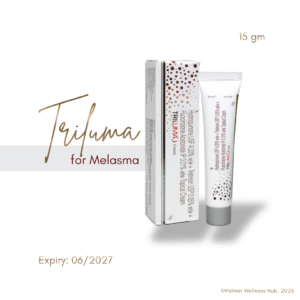
The Tri-Luma Cream formulation (hydroquinone 4% + tretinoin 0.05% + fluocinolone acetonide 0.01%) is designed for the short-term treatment (up to approximately 8 weeks) of moderate to severe facial melasma in adults. In the Philippines, it is essential to emphasise that products containing hydroquinone and tretinoin are regulated as pharmaceutical drugs, not cosmetics.
How it works
-
Hydroquinone 4%: Inhibits the enzyme tyrosinase and reduces melanin production — helping to lighten dark patches.
-
Tretinoin 0.05%: A retinoid that increases epidermal turnover and enhances penetration of the other agents, accelerating pigment reduction.
-
Fluocinolone acetonide 0.01%: A mild corticosteroid that reduces inflammation and skin irritation often associated with retinoid/hydroquinone therapy, thus helping tolerability.
Usage in the Philippines context
Given the tropical climate and strong UV exposure in the Philippines (sunlight being a major trigger for melasma), it is critical to emphasise:
-
Use strict sun protection: broad‐spectrum SPF 30+ (preferably 50), wear wide-brim hat, minimise direct sun exposure.
-
Treatment should be under the supervision of a certified dermatologist in the Philippines.
-
Because hydroquinone and tretinoin are drug-level actives in the Philippines, ensure the product is imported/registered appropriately and used by prescription.
-
Typically applied once nightly to clean, dry facial melasma patches only (cheeks, forehead, upper lip, nose bridge). Avoid broken skin, eyes, lips, nostrils.
-
Monitor for side effects, such as skin irritation, redness, peeling, or paradoxical darkening (exogenous ochronosis).
-
Short‐term course (approximately 8 weeks) is typical; long-term use poses risks of skin thinning, steroid effects or pigment rebound.
Why this formula is beneficial
Melasma is especially common in Asian skin types, including Filipino skin types (Fitzpatrick III-V) where pigmentation issues are more persistent and UV/heat triggers are strong. The triple-combination provides synergistic action: lighten pigment, boost skin turnover, calm inflammation — increasing the chance of visible improvement by week 8 (studies show ~77% achieved complete or near-complete clearing in US trials)
Safety & precautions
-
Not recommended if pregnant or breastfeeding unless clearly indicated and supervised (retinoids & hydroquinone caution)
-
Avoid concurrent use of harsh exfoliants, abrasive soaps, peeling agents or sunlamps.
-
Report immediately: severe burning, blistering, crusting, blue-black skin discolouration (signs of exogenous ochronosis)
-
In the Philippines, ensure the product is legitimately registered; beware of unauthorised importation or cosmetic mis-labelling (hydroquinone/tretinoin banned as cosmetic actives).
FAQs (10)
-
What is Tri-Luma Cream used for?
It’s a prescription topical treatment for moderate to severe facial melasma (dark patches) in adults.
-
How does the triple combination work?
Hydroquinone lightens pigment, tretinoin accelerates skin renewal and penetration, fluocinolone reduces inflammation and irritation.
-
Is the product legal in the Philippines?
Yes—when properly registered as a drug—but hydroquinone and tretinoin are not allowed in cosmetic products in the Philippines.
-
How should I apply it?
Once nightly at bedtime to clean dry face only on affected areas; avoid eyes, lips, broken skin; use with strong sun protection.
-
How long will it take to see results?
Some patients report visible improvement by 4–8 weeks; typical studies around 8 weeks show significant clearing. Tri-Luma® Cream
-
Can it be used permanently?
No, it is intended for short‐term use (about up to 8 weeks) under supervision; long-term use may increase risks.
-
What side effects should I watch for?
Redness, peeling, burning, dryness, itching; rare but serious: skin thinning, adrenal (HPA) suppression, bluish-black skin (exogenous ochronosis). Tri-Luma® Cream+1
-
Can I use it if I’m pregnant or breastfeeding?
You should consult a dermatologist; use in pregnancy/breastfeeding is not well-established and there are potential risks.
-
Do I still need sun protection while using it?
Absolutely—sun exposure can worsen melasma and reduce treatment efficacy. Use SPF + protective clothing.
-
What happens after treatment?
Melasma may recur. Maintenance includes sun protection, possible alternative topical therapies and dermatologist follow-up.
Internal & External Links




Reviews
There are no reviews yet.